 Tahlia Tsama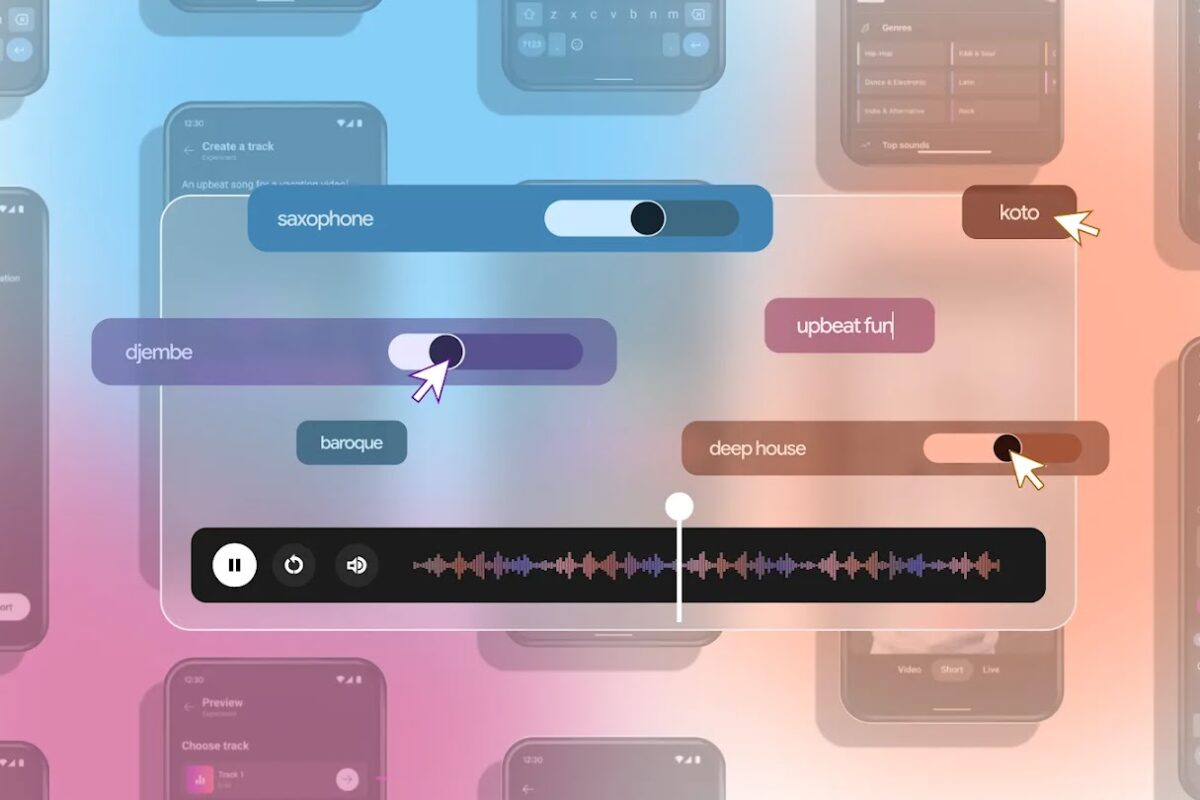
Imagine composing a symphony in minutes or crafting a chart-topping melody without touching an instrument. With AI assisted music composition workflows, that’s no longer science fiction—it’s today’s reality for composers, producers, and creators worldwide.
Understanding AI Assisted Music Composition Workflows
AI assisted music composition workflows represent a seismic shift in how music is created. These systems combine artificial intelligence with human creativity to streamline, enhance, and sometimes even initiate the music-making process. From generating melodies to harmonizing chords, AI tools are now embedded in nearly every stage of composition.
What Are AI Assisted Music Composition Workflows?
At their core, AI assisted music composition workflows are integrated processes where machine learning models assist composers in creating music. These workflows can range from simple melody suggestions to full orchestral arrangements generated by neural networks trained on vast music databases.
- AI analyzes patterns in existing music to generate new compositions.
- Tools integrate into DAWs (Digital Audio Workstations) for real-time collaboration.
- Workflows often include feedback loops where human input refines AI output.
“AI doesn’t replace the composer—it amplifies their voice,” says Dr. Emily Zhang, a computational musicologist at Stanford University.
Historical Evolution of AI in Music
The roots of AI in music stretch back to the 1950s, when early computer programs like ILLIAC I composed simple algorithmic pieces. Over decades, advancements in machine learning and neural networks have transformed these rudimentary experiments into sophisticated tools capable of mimicking human emotion and style.
- 1957: ILLIAC I composes the first computer-generated music.
- 1990s: Symbolic AI systems like David Cope’s EMI create Bach-like fugues.
- 2010s: Deep learning models like Google’s Magenta and OpenAI’s MuseNet emerge.
Today, AI assisted music composition workflows are no longer niche—they’re mainstream, used by indie artists and Hollywood composers alike. Platforms like Google Magenta have democratized access to AI-powered music creation, enabling anyone with a laptop to explore generative composition.
Key Components of AI Assisted Music Composition Workflows
To fully grasp how AI is reshaping music creation, it’s essential to break down the core components that make up these advanced workflows. Each element plays a crucial role in transforming raw ideas into polished compositions.
Generative AI Models for Melody and Harmony
Generative AI models are the backbone of modern AI assisted music composition workflows. These models—often based on recurrent neural networks (RNNs), transformers, or variational autoencoders (VAEs)—learn musical structures from massive datasets of MIDI files, sheet music, and audio recordings.
- Models like Jukebox by OpenAI can generate music with vocals in specific genres and styles.
- Amper Music (now part of Shutterstock) allows users to generate royalty-free tracks via AI.
- These systems can produce melodies, chord progressions, and even full arrangements based on user input.
For example, OpenAI’s Jukebox can generate songs in the style of artists like Frank Sinatra or Kanye West, complete with lyrics and vocal timbres. While not always perfect, these outputs serve as powerful starting points for human composers.
Integration with Digital Audio Workstations (DAWs)
One of the most transformative aspects of AI assisted music composition workflows is their seamless integration with popular DAWs like Ableton Live, Logic Pro, and FL Studio. Plugins and APIs now allow AI tools to operate directly within the composer’s environment.
- Ableton’s upcoming AI features promise real-time chord and rhythm suggestions.
- Plugins like Orb Composer use AI to suggest harmonies based on a single note input.
- DAW-integrated AI reduces context switching and keeps the creative flow uninterrupted.
“The best AI tools don’t disrupt the workflow—they disappear into it,” notes music producer Linda Chen in a 2023 interview with Sound on Sound.
Real-Time Collaboration Between Human and Machine
The most advanced AI assisted music composition workflows emphasize collaboration, not automation. Instead of replacing the composer, AI acts as a co-creator, offering suggestions that the human can accept, modify, or reject.
- Tools like AIVA (Artificial Intelligence Virtual Artist) allow composers to guide the AI through emotional intent (e.g., “sad,” “epic,” “playful”).
- Feedback mechanisms let users rate AI-generated phrases, training the model to better align with their style.
- This iterative process fosters a symbiotic relationship between human intuition and machine precision.
This collaborative model is particularly effective in film scoring, where time constraints demand rapid iteration. Composers can generate multiple thematic variations in minutes, then refine the most promising ones manually.
Top AI Tools Transforming Music Composition
The market for AI music tools has exploded in recent years, with dozens of platforms vying for attention. Below are some of the most influential tools currently shaping AI assisted music composition workflows.
AIVA: Emotional Intelligence in Composition
AIVA (Artificial Intelligence Virtual Artist) stands out for its focus on emotional storytelling. Trained on a vast corpus of classical and cinematic music, AIVA can generate original scores tailored to specific moods and scenes.
- Used by composers for video games, films, and advertising.
- Offers a user-friendly interface where creators set parameters like tempo, key, and emotion.
- Generates sheet music and MIDI files for further editing.
AIVA’s strength lies in its ability to mimic the narrative arc of film music. For instance, a user can input “tense build-up followed by heroic resolution,” and AIVA will generate a piece that follows that emotional trajectory. Learn more at aiva.ai.
Magenta Studio: Open-Source Creativity
Developed by Google’s Magenta project, Magenta Studio is a suite of open-source tools designed for musicians and developers. It includes plugins for melody generation, drum pattern creation, and style transfer.
- Built on TensorFlow, making it highly customizable for developers.
- Integrates with Ableton Live for real-time experimentation.
- Features like “Continue” and “Drumify” help expand musical ideas quickly.
Magenta is particularly popular among experimental musicians and educators. Its transparency and accessibility make it a cornerstone of modern AI assisted music composition workflows. Explore it at Magenta Studio.
Soundful: Instant Royalty-Free Music
Soundful targets content creators who need high-quality background music without licensing headaches. By inputting genre, mood, and duration, users can generate fully licensed tracks in seconds.
- Ideal for YouTubers, podcasters, and social media creators.
- Outputs are downloadable as high-quality audio files.
- AI learns from user preferences to improve future suggestions.
While not designed for deep compositional work, Soundful exemplifies how AI assisted music composition workflows are expanding beyond professional studios into everyday content creation.
Benefits of AI Assisted Music Composition Workflows
The integration of AI into music composition offers a wide array of benefits, from boosting creativity to reducing production time. These advantages are reshaping how music is made across industries.
Accelerated Creative Process
One of the most cited benefits of AI assisted music composition workflows is speed. What used to take hours of trial and error can now be accomplished in minutes.
- AI can generate multiple chord progressions or melodic variations in seconds.
- Composers can explore more ideas in less time, increasing creative output.
- Deadlines in film, TV, and gaming are easier to meet with AI support.
For example, a composer working on a tight deadline for a documentary can use AI to generate a base theme, then spend time refining it rather than starting from scratch.
Democratization of Music Creation
AI is breaking down barriers to entry in music composition. You no longer need years of training or expensive equipment to create professional-sounding music.
- Beginners can use AI tools to learn music theory through experimentation.
- Non-musicians can generate background scores for videos or apps.
- Global access to AI tools fosters inclusivity in music production.
“AI puts the power of composition in the hands of anyone with an idea,” says musician and educator Raj Patel.
Platforms like Boomy allow users to create and release songs with minimal input, even distributing them to Spotify and Apple Music. This level of accessibility was unimaginable just a decade ago.
Enhanced Creative Exploration
AI doesn’t just speed up composition—it expands the creative horizon. By suggesting unexpected harmonies, rhythms, or genres, AI can push composers out of their comfort zones.
- AI can blend genres (e.g., jazz and metal) to create novel sounds.
- It can introduce microtonal scales or complex time signatures that humans might overlook.
- Exploratory AI tools encourage sonic innovation and artistic risk-taking.
In academic settings, AI assisted music composition workflows are used to teach students about musical structure and improvisation. The AI acts as a sandbox for experimentation, where mistakes are low-cost and learning is rapid.
Challenges and Ethical Considerations
Despite their promise, AI assisted music composition workflows are not without controversy. Technical, legal, and ethical challenges must be addressed as the technology evolves.
Copyright and Ownership Issues
One of the biggest unresolved questions is: who owns AI-generated music? If an AI creates a melody based on training data from copyrighted songs, does the original artist have a claim?
- Current U.S. copyright law does not recognize AI as an author.
- Ownership typically defaults to the human who initiated the process.
- However, lawsuits are emerging over AI models trained on unlicensed music.
In 2023, a group of musicians filed a class-action lawsuit against AI music companies for training models on their work without consent. This legal gray area could impact how AI assisted music composition workflows are regulated in the future.
Loss of Human Touch and Authenticity
Critics argue that AI-generated music lacks the emotional depth and cultural context of human-created works. While AI can mimic style, it doesn’t “feel” the music it produces.
- Listeners may detect a lack of nuance or spontaneity in AI compositions.
- Over-reliance on AI could lead to homogenized music across genres.
- The risk of “emotional flatness” is a concern in narrative-driven media like film.
However, many composers counter that AI is a tool, not a replacement. Just as the synthesizer didn’t kill live instrumentation, AI won’t eliminate human artistry—it will evolve it.
Data Bias and Representation
AI models are only as good as their training data. If the data is skewed toward Western classical or popular music, the AI will reflect those biases.
- Underrepresented genres (e.g., traditional African or Indigenous music) may be poorly modeled.
- This can perpetuate cultural imbalances in music production.
- Efforts are underway to diversify training datasets and improve inclusivity.
Organizations like MusicAI are advocating for ethical AI practices in music, including transparent data sourcing and fair compensation for artists whose work is used in training.
Industry Applications of AI Assisted Music Composition Workflows
AI assisted music composition workflows are not limited to solo creators—they’re being adopted across multiple industries, each with unique needs and use cases.
Film and Television Scoring
In film and TV, time and budget constraints make AI an attractive option for composers. AI can generate temp tracks, thematic motifs, and ambient backgrounds quickly.
- AI helps composers pitch ideas to directors faster.
- Used in pre-visualization stages to set mood and pacing.
- Can generate variations of a theme for different scenes.
For example, the Netflix series *Love, Death & Robots* used AI-generated music in some episodes to explore futuristic soundscapes. While final scores were often reworked by human composers, AI provided a crucial starting point.
Video Game Music and Adaptive Soundtracks
Video games require dynamic, adaptive music that responds to player actions. AI assisted music composition workflows excel in this environment.
- AI can generate branching musical paths based on gameplay events.
- Tools like Melodrive (now part of Soundly) create real-time adaptive scores.
- Reduces the need for pre-composed loops and enhances immersion.
In games like *No Man’s Sky*, procedural generation extends to music, with AI creating unique soundscapes for each planet. This level of personalization was previously impossible with traditional scoring methods.
Advertising and Content Creation
Brands and content creators need music fast—and often on a budget. AI tools deliver high-quality, royalty-free tracks tailored to brand identity.
- AI generates music that matches ad tone (e.g., upbeat, nostalgic, dramatic).
- Platforms like Soundful offer instant downloads with commercial licenses.
- Reduces dependency on stock music libraries.
Major brands like Coca-Cola and Nike have experimented with AI-generated jingles, testing multiple versions before selecting the most effective one.
The Future of AI Assisted Music Composition Workflows
As AI technology advances, so too will its role in music creation. The future promises even deeper integration, greater personalization, and new forms of artistic expression.
Hyper-Personalized Music Generation
Future AI systems may generate music tailored to individual listeners’ biometrics, moods, or even brainwaves.
- Wearable devices could feed real-time data to AI music engines.
- Music adapts dynamically to stress levels, heart rate, or sleep cycles.
- Imagine a playlist that evolves with your emotions throughout the day.
Companies like Endel are already developing AI-powered soundscapes for focus and relaxation, using environmental and physiological inputs.
AI as a Collaborative Bandmate
Instead of a tool, AI could become a true creative partner—listening, responding, and improvising in real time.
- Live AI performers could jam with human musicians on stage.
- Systems like Google’s MusicLM enable text-to-music generation with conversational interfaces.
- AI could learn a musician’s style and anticipate their next move.
In 2022, the band YACHT released an album where AI co-wrote lyrics and melodies, showcasing a new model of human-AI collaboration.
Ethical Frameworks and Industry Standards
As adoption grows, the industry will need clear guidelines for AI use in music.
- Standardized licensing for AI training data.
- Transparency in how models are trained and used.
- Compensation models for artists whose work informs AI systems.
Organizations like the World Intellectual Property Organization (WIPO) are already hosting forums on AI and copyright, signaling a move toward global regulation.
What are AI assisted music composition workflows?
AI assisted music composition workflows are processes that use artificial intelligence to help create music, from generating melodies to arranging full compositions, often in collaboration with human composers.
Can AI compose music independently?
Yes, AI can generate complete pieces of music, but the most effective results come from human-AI collaboration, where the composer guides and refines the AI’s output.
Is AI-generated music copyrighted?
Under current laws, AI-generated music can be copyrighted if a human has made significant creative contributions. Pure AI output without human input is generally not eligible for copyright.
What are the best AI tools for music composition?
Top tools include AIVA, Google Magenta, Soundful, and Boomy, each offering unique features for melody generation, arrangement, and royalty-free music creation.
Will AI replace human composers?
No, AI is not expected to replace human composers but rather to augment their creativity, streamline workflows, and open new avenues for musical exploration.
AI assisted music composition workflows are transforming the landscape of music creation. From accelerating the creative process to enabling new forms of expression, these tools are empowering composers, producers, and creators like never before. While challenges around ethics, ownership, and authenticity remain, the future of music is undeniably collaborative—one where human intuition and artificial intelligence work in harmony to push the boundaries of what’s possible.
Recommended for you 👇
Further Reading: