
 Tahlia Tsama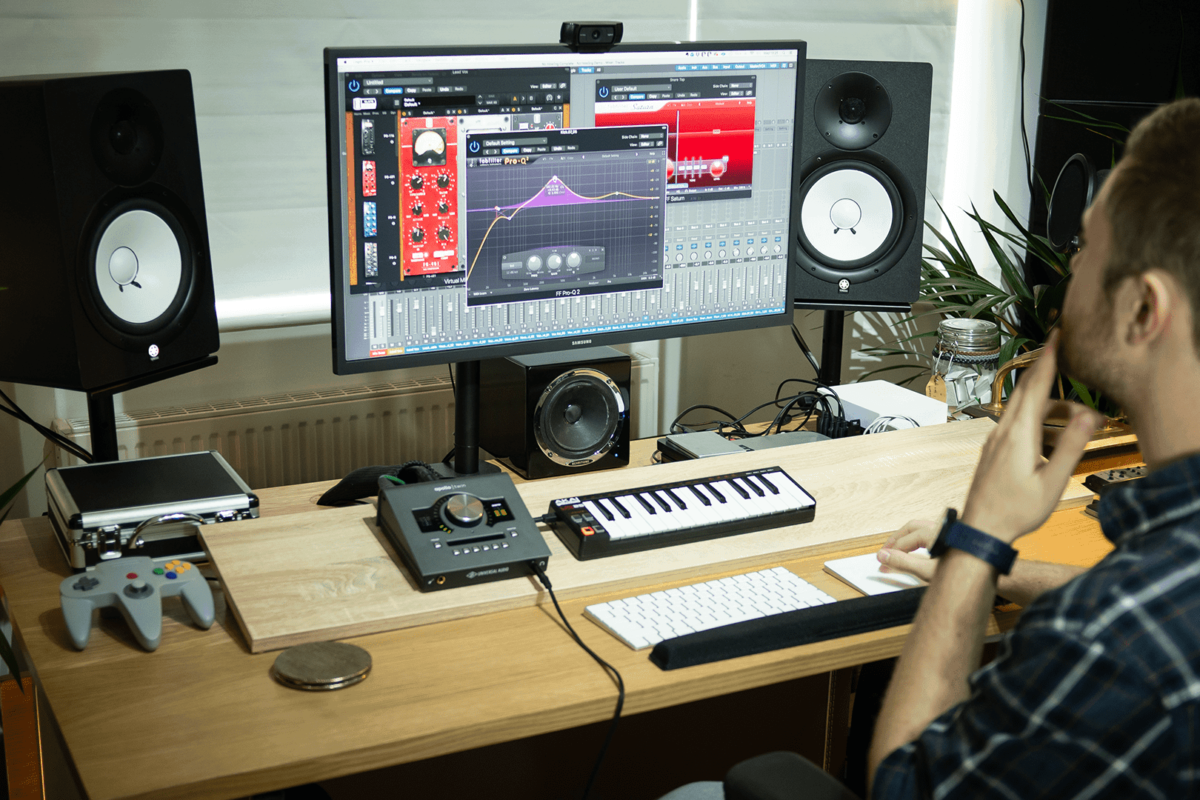
Starting your music production journey? Discover the ultimate guide to home studio setups for beginner producers—affordable, effective, and easy to build.
1. Understanding the Basics of Home Studio Setups for Beginner Producers
Creating music from home has never been more accessible. With the right knowledge and tools, anyone can build a functional and inspiring workspace. For beginner producers, the idea of setting up a home studio can feel overwhelming. However, breaking it down into manageable components makes the process much simpler. The goal is not to replicate a professional recording studio but to create a space where creativity flows and high-quality music can be produced.
What Is a Home Studio?
A home studio is a personal recording environment designed for creating, recording, editing, and mixing music. Unlike commercial studios, home studios are typically smaller, more affordable, and tailored to individual needs. They can range from a simple laptop setup with headphones to a dedicated room with acoustic treatment, microphones, and instruments.
home studio setups for beginner producers – Home studio setups for beginner producers menjadi aspek penting yang dibahas di sini.
According to Sound on Sound, the modern home studio is now capable of producing tracks that rival those made in high-end facilities, thanks to advancements in digital audio workstations (DAWs) and affordable hardware.
Why Start with a Home Studio?
Home studio setups for beginner producers offer flexibility, privacy, and cost-efficiency. You can work at your own pace, experiment freely, and avoid hourly studio fees. Moreover, building your own setup helps you learn the technical side of music production, from signal flow to sound design.
- Full creative control over your music
- No time constraints or booking hassles
- Opportunity to learn production skills hands-on
“The best studio is the one you have access to every day.” — Rick Rubin
2. Essential Equipment for Home Studio Setups for Beginner Producers
Every great home studio starts with the right gear. While it’s tempting to buy everything at once, focus on the core components first. These essentials form the foundation of your setup and allow you to start producing immediately. As your skills grow, you can expand your collection strategically.
home studio setups for beginner producers – Home studio setups for beginner producers menjadi aspek penting yang dibahas di sini.
Digital Audio Workstation (DAW)
The DAW is the heart of your home studio. It’s the software where you record, edit, mix, and master your music. There are many DAWs available, each with unique features and workflows. For beginners, ease of use and available tutorials are key factors.
Popular DAWs include Ableton Live, FL Studio, Logic Pro X (Mac only), and Reaper. Most offer free trials, so you can test them before committing. Ableton Live, for example, is widely praised for its intuitive interface and powerful MIDI capabilities, making it ideal for electronic music producers.
- Beginner-friendly DAWs: GarageBand (free), Cakewalk by BandLab (free)
- Paid options with free trials: Cubase, Pro Tools, Studio One
- Choose based on your music genre and workflow preference
Audio Interface
An audio interface connects your microphones, instruments, and monitors to your computer. It converts analog signals to digital and vice versa, ensuring high-quality sound input and output. Built-in laptop sound cards are not sufficient for professional recording due to latency and poor audio quality.
home studio setups for beginner producers – Home studio setups for beginner producers menjadi aspek penting yang dibahas di sini.
Look for an interface with at least two input channels, phantom power (for condenser mics), and low-latency drivers. The Focusrite Scarlett 2i2 is a top choice for beginners, offering excellent sound quality, durability, and compatibility with all major DAWs.
- Key features to look for: XLR inputs, 1/4″ jacks, headphone output, direct monitoring
- Budget-friendly options: PreSonus AudioBox USB, Behringer U-Phoria
- Higher-end options: Universal Audio Apollo Twin, MOTU M2
3. Choosing the Right Microphones and Instruments
Microphones and instruments are the soul of your recordings. Whether you’re capturing vocals, acoustic guitars, or live drums, having the right tools makes a huge difference in sound quality.
Types of Microphones for Home Studios
There are three main types of microphones: dynamic, condenser, and ribbon. For home studio setups for beginner producers, condenser mics are often preferred for their sensitivity and clarity, especially for vocals and acoustic instruments.
home studio setups for beginner producers – Home studio setups for beginner producers menjadi aspek penting yang dibahas di sini.
The Audio-Technica AT2020 is a popular entry-level condenser microphone known for its balanced sound and affordability. Dynamic mics like the Shure SM58 are great for loud sources and live vocals, while ribbon mics are more specialized and typically used in advanced setups.
- Condenser mics: Best for vocals, acoustic instruments (require phantom power)
- Dynamic mics: Durable, great for loud sources like guitar amps
- USB mics: Plug-and-play option for quick recordings (e.g., Blue Yeti)
Essential Instruments and Controllers
Even if you’re not a multi-instrumentalist, having a MIDI keyboard or controller can greatly enhance your production. These devices allow you to play virtual instruments, trigger samples, and control your DAW with physical knobs and pads.
The Akai MPK Mini is a compact, budget-friendly MIDI controller with 25 keys, drum pads, and assignable knobs. For more advanced control, consider the Novation Launchkey or Native Instruments Komplete Kontrol series.
home studio setups for beginner producers – Home studio setups for beginner producers menjadi aspek penting yang dibahas di sini.
- MIDI keyboards: Essential for composing melodies and chords
- Drum pads: Great for beat-making and sample triggering
- Control surfaces: Help automate mixing and effects in your DAW
“A good microphone can capture emotion; a great producer knows how to use it.” — Unknown
4. Monitoring: Studio Monitors vs. Headphones
Accurate monitoring is crucial for making good mixing decisions. You need to hear your music as it truly is, not colored by poor speakers or headphones. This is where studio monitors and reference headphones come in.
Why Studio Monitors Matter
Studio monitors are designed to provide a flat frequency response, meaning they don’t boost or cut certain frequencies like consumer speakers. This allows you to hear the true balance of your mix. Placing them correctly in your room is just as important as the monitors themselves.
Popular beginner options include the Yamaha HS5, KRK Rokit 5, and JBL 305P MkII. These are affordable, reliable, and widely used in home studios. Make sure to position them at ear level, forming an equilateral triangle with your listening position.
home studio setups for beginner producers – Home studio setups for beginner producers menjadi aspek penting yang dibahas di sini.
- Active monitors have built-in amplifiers (recommended for beginners)
- Passive monitors require a separate amplifier
- Aim for a neutral sound profile, not one that sounds “exciting”
The Role of Headphones in Production
Headphones are essential for tracking, editing, and detailed mixing. They allow you to hear subtle details that might be missed on monitors. Closed-back headphones are preferred for recording to prevent sound leakage into microphones.
The Audio-Technica ATH-M50x and Beyerdynamic DT 770 Pro are industry standards for their comfort, durability, and accurate sound. Open-back headphones like the Sennheiser HD 600 offer a more natural soundstage but are not ideal for tracking.
- Closed-back: Best for recording and isolating sound
- Open-back: Better for mixing, but sound leaks out
- Always use headphones for vocal comping and noise reduction
5. Acoustic Treatment and Room Setup
No matter how expensive your gear is, poor room acoustics can ruin your mixes. Reflections, standing waves, and background noise can distort your perception of sound. Acoustic treatment is not optional—it’s essential for accurate monitoring.
home studio setups for beginner producers – Home studio setups for beginner producers menjadi aspek penting yang dibahas di sini.
Common Room Acoustics Problems
Most home studios are set up in bedrooms, living rooms, or basements, which are not designed for audio production. These spaces suffer from flutter echoes, bass buildup in corners, and uneven frequency response. Without treatment, you might think your mix sounds good at home but terrible on other systems.
Key issues include:
- First reflection points: Sound bounces off walls and reaches your ears slightly delayed
- Room modes: Low frequencies build up in corners and along walls
- Background noise: HVAC systems, traffic, or household sounds can interfere with recordings
DIY Acoustic Treatment Solutions
You don’t need to spend thousands on professional treatment. Simple DIY solutions can make a big difference. Start with bass traps in corners, absorption panels at first reflection points, and a diffuser behind your listening position.
home studio setups for beginner producers – Home studio setups for beginner producers menjadi aspek penting yang dibahas di sini.
Materials like rockwool or Owens Corning 703 are effective for absorption. Cover them with fabric to make them look professional. You can build your own panels or buy affordable kits from companies like GIK Acoustics.
- Place bass traps in all room corners
- Install absorption panels at ear level on side walls
- Use a rug or carpet to reduce floor reflections
“You can’t fix it in the mix if the room is broken.” — Bob Katz, mastering engineer
6. Cables, Stands, and Accessories
It’s easy to overlook the small stuff, but cables, mic stands, and accessories are the glue that holds your home studio setups for beginner producers together. Poor-quality cables can introduce noise, and unstable stands can damage expensive gear.
Must-Have Cables and Connectors
You’ll need a variety of cables: XLR for microphones, 1/4″ TRS for instruments and monitors, and USB or Thunderbolt for your audio interface. Always buy shielded cables from reputable brands to avoid interference.
home studio setups for beginner producers – Home studio setups for beginner producers menjadi aspek penting yang dibahas di sini.
Brands like Hosa, Mogami, and Canare are trusted in the industry for their durability and clean signal transmission. Avoid cheap, no-name cables—they often fail prematurely or add noise to your signal chain.
- XLR cables: For connecting mics to interfaces
- TRS cables: For balanced connections to monitors
- USB/Thunderbolt: For high-speed data transfer
Microphone Stands and Mounts
A sturdy mic stand is essential for vocal recording. Boom stands offer flexibility, allowing you to position the mic precisely. Shock mounts isolate the microphone from vibrations, while pop filters reduce plosive sounds (like “p” and “b”).
The On-Stage MS7401 is a reliable, affordable boom stand. For vocalists, the Rode PSA1 is a popular articulated arm mount that keeps the mic out of the way when not in use.
home studio setups for beginner producers – Home studio setups for beginner producers menjadi aspek penting yang dibahas di sini.
- Boom stands: Allow flexible mic positioning
- Shock mounts: Reduce handling noise and desk vibrations
- Pop filters: Prevent plosives from distorting vocal recordings
7. Software, Plugins, and Virtual Instruments
Hardware is only half the story. The software you use defines your creative possibilities. From reverb plugins to virtual synths, the digital world offers endless tools for shaping your sound.
Essential Plugins for Beginners
Every producer needs a basic toolkit of plugins: EQ, compression, reverb, and delay. These are used to shape tone, control dynamics, and add space to your mix. Most DAWs come with built-in plugins that are more than sufficient for starting out.
For example, Ableton Live includes excellent stock plugins like EQ Eight, Compressor, and Reverb. If you want third-party options, consider the free Valhalla Supermassive (reverb) or TDR Nova (dynamic EQ) from Tokyo Dawn Labs.
home studio setups for beginner producers – Home studio setups for beginner producers menjadi aspek penting yang dibahas di sini.
- EQ: Shape the frequency balance of your tracks
- Compression: Control dynamics and add punch
- Reverb/Delay: Create depth and space
Virtual Instruments and Sample Libraries
Virtual instruments allow you to play realistic drums, pianos, strings, and synths without owning physical instruments. Many come bundled with DAWs or are available as free downloads.
Native Instruments’ Kontakt Player offers free libraries like “Session Strings” and “Urban Shakers.” Splice Sounds is a subscription service that provides high-quality samples and loops for all genres.
- Use virtual pianos for chord progressions and melodies
- Drum machines and samplers for beat creation
- Orchestral libraries for cinematic music
“The best plugin is the one you know how to use.” — Andrew Scheps
What is the cheapest way to start a home studio?
home studio setups for beginner producers – Home studio setups for beginner producers menjadi aspek penting yang dibahas di sini.
The cheapest way to start a home studio is by using free software like Cakewalk or GarageBand, a USB microphone like the Audio-Technica AT2020USB, and closed-back headphones. You can begin producing music for under $200 with this basic setup.
Do I need acoustic treatment for my home studio?
Yes, acoustic treatment is essential for accurate monitoring. Even basic absorption panels and bass traps can dramatically improve the sound of your room and help you make better mixing decisions.
home studio setups for beginner producers – Home studio setups for beginner producers menjadi aspek penting yang dibahas di sini.
Can I use headphones instead of studio monitors?
You can use headphones, especially when starting out, but they should not replace studio monitors entirely. Headphones lack the spatial accuracy of monitors and can lead to mixes that don’t translate well to other systems.
Which DAW is best for beginners?
home studio setups for beginner producers – Home studio setups for beginner producers menjadi aspek penting yang dibahas di sini.
For beginners, FL Studio, Ableton Live, and GarageBand are highly recommended due to their user-friendly interfaces and extensive tutorials. GarageBand is free for Mac users and is a great entry point.
How important is an audio interface?
An audio interface is crucial for high-quality recording. It provides better preamps, lower latency, and more connectivity than built-in laptop sound cards, making it a must-have for any serious home studio setup.
Building effective home studio setups for beginner producers doesn’t require a massive budget or technical expertise. By focusing on the essentials—DAW, audio interface, monitors, microphone, and acoustic treatment—you can create a functional and inspiring workspace. The key is to start simple, learn the fundamentals, and upgrade gradually. With dedication and the right tools, your home studio can become the launchpad for your music career.
Further Reading: