
 Tahlia Tsama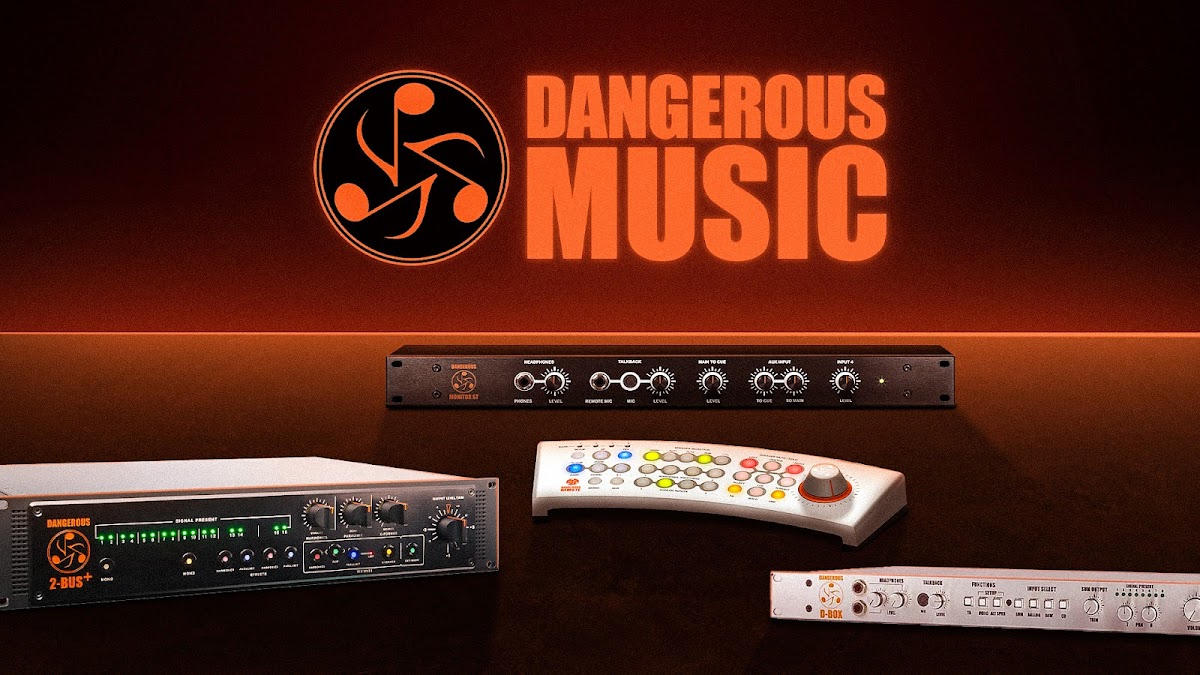
In the ever-evolving world of music production, hybrid digital analog music setups are revolutionizing how artists create. Blending vintage warmth with modern precision, these systems offer the best of both worlds—rich textures and seamless workflow.
Understanding hybrid digital analog music setups

The concept of hybrid digital analog music setups has gained massive traction among producers, engineers, and musicians who seek both sonic authenticity and technological flexibility. At its core, a hybrid setup combines analog gear—like synthesizers, tape machines, and outboard processors—with digital tools such as DAWs (Digital Audio Workstations), plugins, and MIDI controllers. This fusion allows for unparalleled creative freedom, enabling users to exploit the warmth and character of analog circuits while benefiting from the recallability, editing power, and convenience of digital systems.
Defining the hybrid approach
The term ‘hybrid’ in music production refers to a workflow that intentionally integrates both analog and digital components. Unlike purely digital setups that rely entirely on software, or fully analog studios that avoid computers altogether, hybrid setups embrace a symbiotic relationship between the two domains. For example, a producer might record a live bassline through an analog preamp and compressor, then edit and quantize the performance in Ableton Live or Pro Tools.
- Analog gear provides harmonic richness, tactile control, and organic dynamics.
- Digital systems offer non-destructive editing, automation, and vast plugin libraries.
- The hybrid model maximizes the strengths of each while minimizing their weaknesses.
Historical evolution of hybrid workflows
The roots of hybrid setups can be traced back to the late 1970s and 1980s, when early digital recording devices like the Sony PCM-1600 began appearing in analog studios. Engineers would record to analog tape but use digital processors for effects or mastering. As MIDI was standardized in 1983, it became easier to synchronize analog synths with digital sequencers. Fast forward to the 2000s, the rise of affordable audio interfaces and powerful DAWs made it feasible for home studios to adopt hybrid models.
“The future of music isn’t purely digital or analog—it’s hybrid. The best sounds come from the friction between old and new.” — Greg Wells, Grammy-winning producer
Why hybrid digital analog music setups dominate modern studios
Today, hybrid digital analog music setups are not just a trend—they’re a standard in professional and semi-professional studios. Their dominance stems from a balanced combination of sonic quality, workflow efficiency, and creative versatility. Whether you’re scoring a film, producing electronic music, or tracking a live band, a hybrid approach offers tangible benefits that neither domain can achieve alone.
hybrid digital analog music setups – Hybrid digital analog music setups menjadi aspek penting yang dibahas di sini.
Sonic superiority through analog coloration
Analog equipment imparts a unique sonic signature due to circuit nonlinearities, transformer saturation, and subtle harmonic distortion. These characteristics are often described as “warmth,” “depth,” or “glue.” When used in a hybrid setup, analog processors can be applied to digital tracks to add character. For instance, running a drum bus through an API 550B EQ or a Neve 33609 compressor can transform a flat, lifeless mix into something punchy and alive.
- Tube and transistor saturation add pleasing even- and odd-order harmonics.
- Analog filters have a smoother, more musical roll-off than digital emulations.
- Real-world component variance gives each unit a unique voice.
Digital precision and workflow flexibility
While analog gear excels in sound quality, digital systems shine in precision and repeatability. DAWs allow for non-linear editing, unlimited undo history, and sample-accurate timing. You can easily comp vocals, time-stretch loops, or automate dozens of parameters across a mix. This level of control is nearly impossible in a purely analog environment without extensive tape editing or manual fader rides.
Moreover, digital tools enable collaboration across distances. A producer in Berlin can send a session file to a mixer in Los Angeles, who can load all plugins and recall settings instantly—something unthinkable in a tape-based workflow.
Essential components of hybrid digital analog music setups
Building a successful hybrid setup requires careful selection of both analog and digital components. The goal is to create a seamless integration where signals flow naturally between domains. Below are the key elements you’ll need to consider.
Analog gear: Synths, outboard, and preamps
Analog hardware forms the soul of any hybrid system. Common components include:
hybrid digital analog music setups – Hybrid digital analog music setups menjadi aspek penting yang dibahas di sini.
- Analog synthesizers: Instruments like the Moog Subsequent 37, Roland Jupiter-X, or Korg Minilogue provide authentic analog oscillators, filters, and envelopes. They can be controlled via MIDI from a DAW and their audio output recorded back into the computer.
- Outboard processors: Compressors (e.g., Empirical Labs Distressor), EQs (e.g., Pultec EQP-1A), and reverbs (e.g., Lexicon 224) add color and dynamics control. These are often used during tracking or mixing.
- Microphone preamps: Units like the Universal Audio 610 or Neve 1073 enhance the tone of recorded sources, especially vocals and acoustic instruments.
When integrating analog gear, ensure you have proper cabling, power conditioning, and signal level matching to avoid noise or distortion.
Digital backbone: DAWs, interfaces, and controllers
The digital side of a hybrid setup revolves around three core components:
Digital Audio Workstation (DAW): Software like Ableton Live, Pro Tools, or Cubase serves as the central hub for recording, editing, and mixing.Audio interface: This device converts analog signals to digital and vice versa.High-quality interfaces like the Universal Audio Apollo or RME Babyface Pro FS offer low latency, pristine AD/DA conversion, and built-in DSP for real-time plugin processing.MIDI and control surfaces: Devices like the Novation Launchkey or Avid S1 allow hands-on control of virtual instruments and mixer parameters, bridging the tactile gap of digital production.
.”An interface is not just a converter—it’s the translator between your analog soul and digital brain.” — Sound on Sound Magazine
Designing your hybrid digital analog music setups: Workflow strategies
Even with the best gear, a hybrid setup can become chaotic without a clear workflow.The key is to define a signal flow that maximizes efficiency and creativity.Below are proven strategies used by top producers..
Tracking: Analog front-end, digital recording
One of the most common hybrid workflows involves using analog preamps and compressors during tracking, while recording directly into a DAW. For example:
hybrid digital analog music setups – Hybrid digital analog music setups menjadi aspek penting yang dibahas di sini.
- Connect a microphone to an analog preamp (e.g., API 3124+).
- Send the output to a compressor (e.g., DBX 160A) for gain control.
- Route the processed signal to an audio interface and record into your DAW.
This method captures the sonic benefits of analog processing while retaining the flexibility of digital editing. It’s widely used in vocal, guitar, and drum tracking.
Sound design: Analog synths into digital environments
Many electronic producers use analog synthesizers as sound sources, recording their output into a DAW for further manipulation. This allows for:
- Creating unique, unrepeatable sounds using analog oscillators and modulation.
- Layering analog sounds with digital plugins (e.g., granular effects, spectral processors).
- Using DAW automation to modulate effects on recorded analog performances.
For instance, a producer might record a long, evolving pad from a Sequential Prophet-5, then apply stutter edits, pitch shifting, and reverb in Ableton Live to create a cinematic texture.
Integration techniques for seamless hybrid digital analog music setups
The success of a hybrid system depends on how well the analog and digital domains communicate. Poor integration can lead to latency, ground loops, or signal degradation. Here’s how to ensure smooth operation.
Signal flow and routing best practices
Establishing a clear signal path is crucial. A typical hybrid signal flow might look like this:
hybrid digital analog music setups – Hybrid digital analog music setups menjadi aspek penting yang dibahas di sini.
- Microphone → Analog Preamp → Analog Compressor → Audio Interface (A/D Conversion) → DAW
- DAW Output → Audio Interface (D/A Conversion) → Analog EQ → Analog Reverb → Monitors
Use balanced cables (XLR or TRS) to minimize noise, and keep analog and digital power supplies separate to avoid ground loops. Label all cables and use patch bays for complex setups.
MIDI and synchronization
MIDI is the nervous system of a hybrid setup. It allows DAWs to control analog synths and hardware samplers. To ensure tight synchronization:
- Use MIDI interfaces with low jitter.
- Enable MIDI clock sync in your DAW to drive analog sequencers (e.g., Elektron boxes).
- Consider using DIN, USB, or CV/Gate for modular systems.
For advanced users, tools like the Expert Sleepers ES-3 or Mutable Instruments Yarns can bridge Eurorack modular systems with DAWs via MIDI-to-CV conversion.
Optimizing hybrid digital analog music setups for different genres
Hybrid setups are not one-size-fits-all. Different musical genres benefit from specific configurations and processing chains. Let’s explore how hybrid systems are tailored across styles.
Electronic music: Analog warmth meets digital precision
In electronic genres like techno, house, or synthwave, producers often use analog synths for basslines and leads, while relying on digital tools for sequencing and effects. A typical chain:
hybrid digital analog music setups – Hybrid digital analog music setups menjadi aspek penting yang dibahas di sini.
- Moog Sub Phatty → Audio Interface → Ableton Live (for sidechain compression and automation).
- DAW sends MIDI to Roland TR-8S for drum patterns.
- Analog delay (e.g., Strymon El Capistan) used on vocal samples routed from the DAW.
This blend gives electronic music its punchy, dynamic feel while retaining analog soul.
Rock and indie: Capturing live energy with analog character
For rock bands, hybrid setups excel in tracking live performances. Engineers often use analog preamps on all inputs, route drums through a summing mixer, and record individual tracks into a DAW for editing. After recording, analog compressors may be used on the mix bus to “glue” the tracks together.
Example setup:
- Drums: Shure SM57s into Neve preamps → recorded in Pro Tools.
- Vocals: Telefunken ELA M 251 into UA 610 → compressed with LA-2A.
- Mix: Summed through Dangerous Music Summing Box, then printed to DAW.
Future trends in hybrid digital analog music setups
As technology evolves, so do hybrid setups. Emerging trends are making these systems more accessible, intelligent, and integrated than ever before.
Modular and DIY integration
The Eurorack modular synthesizer movement has brought a new level of customization to hybrid setups. Musicians can design their own signal paths, combining digital and analog modules in a single case. Companies like Make Noise, Intellijel, and Mutable Instruments offer modules that generate, process, and sequence sound in innovative ways.
hybrid digital analog music setups – Hybrid digital analog music setups menjadi aspek penting yang dibahas di sini.
Moreover, DIY communities are creating open-source firmware and hardware interfaces that allow modular systems to communicate directly with DAWs, enabling bidirectional control and automation.
AI and machine learning in hybrid workflows
Artificial intelligence is beginning to influence hybrid setups. Tools like iZotope’s Neutron use machine learning to analyze mixes and suggest EQ or compression settings. In the future, AI could dynamically route signals between analog and digital domains based on content analysis.
For example, an AI system might detect a vocal track and automatically engage a vintage-style analog compressor plugin or route it to an external hardware unit via plugin-to-hardware bridging software like Reamp.it.
“AI won’t replace engineers, but it will empower hybrid producers to make smarter decisions faster.” — MusicTech Magazine
Troubleshooting common issues in hybrid digital analog music setups
Even the most thoughtfully designed hybrid systems can encounter problems. Here are frequent issues and how to resolve them.
Latency and timing misalignment
Latency occurs when there’s a delay between input and output, often due to slow audio interfaces or excessive plugin processing. To minimize latency:
hybrid digital analog music setups – Hybrid digital analog music setups menjadi aspek penting yang dibahas di sini.
- Use low buffer sizes (64 or 128 samples) during recording.
- Enable direct monitoring on your audio interface.
- Freeze or bounce tracks with heavy plugins.
For analog round-tripping (sending a signal out and back in), ensure your DAW compensates for plugin delay and analog processing time.
Ground loops and noise
Hum, buzz, or interference often stem from ground loops—multiple paths to ground in interconnected devices. Solutions include:
- Using balanced cables and proper shielding.
- Employing ground lift switches on DI boxes or interfaces.
- Powering all gear from a single power conditioner.
If noise persists, try isolating components with transformers or using a DI box with ground isolation.
What are hybrid digital analog music setups?
Hybrid digital analog music setups combine analog hardware (like synthesizers, preamps, and compressors) with digital tools (such as DAWs, plugins, and MIDI controllers) to create a balanced production environment that leverages the warmth of analog and the precision of digital technology.
hybrid digital analog music setups – Hybrid digital analog music setups menjadi aspek penting yang dibahas di sini.
Why should I use a hybrid setup instead of a fully digital one?
A hybrid setup offers superior sound quality through analog coloration, while retaining the editing power, automation, and recallability of digital systems. It provides a more tactile, creative experience and can result in more dynamic, expressive music.
What is the best audio interface for hybrid setups?
Top choices include the Universal Audio Apollo series, RME Babyface Pro FS, and Focusrite Clarett+. These offer high-quality AD/DA conversion, low latency, and often include onboard DSP for real-time plugin processing, making them ideal for integrating analog and digital workflows.
Can I build a hybrid setup on a budget?
hybrid digital analog music setups – Hybrid digital analog music setups menjadi aspek penting yang dibahas di sini.
Yes. Start with a used analog synth or preamp, pair it with an affordable audio interface (like the Behringer UMC series), and use free DAWs like Cakewalk or Tracktion. Gradually expand your setup as your budget allows.
How do I sync analog gear with my DAW?
Use MIDI clock synchronization. Most DAWs can send MIDI clock to hardware synths and drum machines. For modular systems, consider MIDI-to-CV converters like the Expert Sleepers ES-3 or Intellijel uMIDI.
Hybrid digital analog music setups represent the pinnacle of modern music production, merging the soulful character of analog gear with the limitless possibilities of digital technology. By understanding the components, workflows, and integration techniques, musicians can craft a system that enhances both sound quality and creative expression. Whether you’re a bedroom producer or a professional engineer, embracing the hybrid model opens doors to richer, more dynamic music. As technology continues to evolve, the line between analog and digital will blur even further—ushering in a new era of sonic innovation.
Further Reading: