
 Tahlia Tsama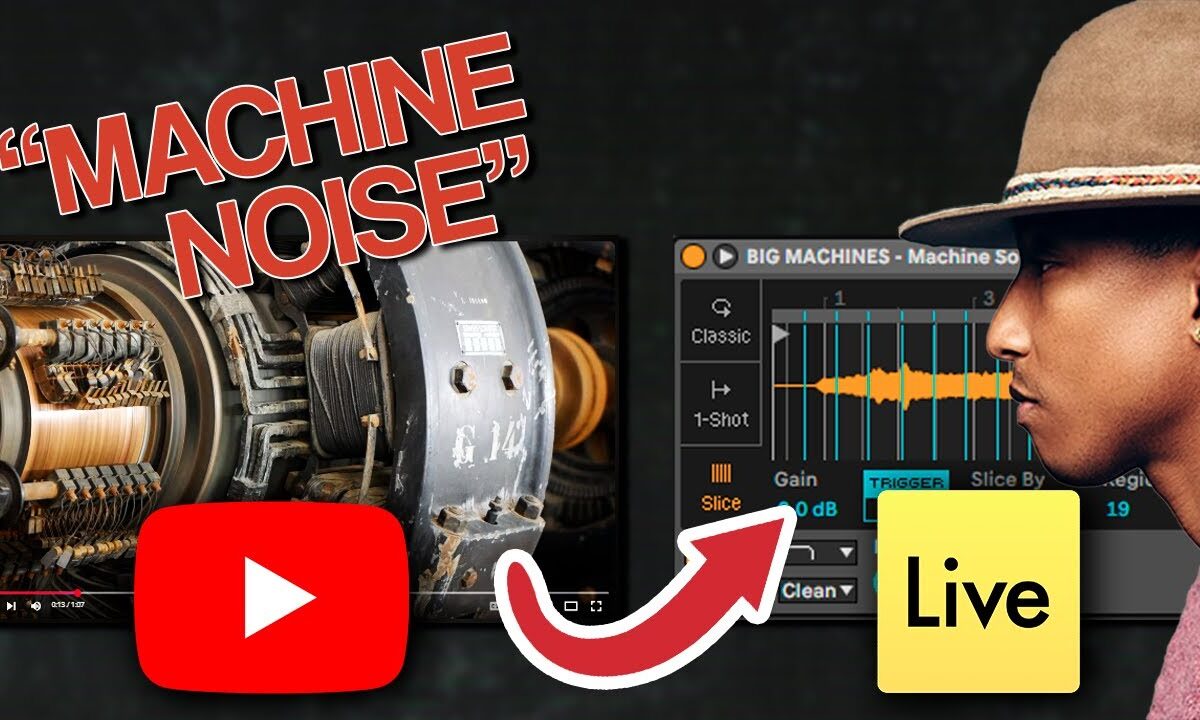
Ever dropped your keys and heard a rhythm in the clatter? Welcome to the world of turning accidental sounds into creative samples—where chaos meets melody in the most unexpected ways.
Turning Accidental Sounds into Creative Samples: The Art of Sonic Alchemy
The practice of turning accidental sounds into creative samples is more than a quirky studio trick—it’s a fundamental shift in how we perceive music creation. Instead of relying solely on traditional instruments or digital presets, artists are now mining the sonic gold hidden in everyday life. From the hum of a refrigerator to the squeak of a door hinge, ordinary environments are becoming extraordinary sound sources.
What Are Accidental Sounds?
Accidental sounds—also known as found sounds or environmental audio—are noises not originally intended for musical use. These can include footsteps on gravel, the clinking of dishes, or even the distant rumble of a subway train. What makes them ‘accidental’ is their unplanned nature; they occur outside the context of music-making but can be repurposed with creative intent.
- They are often overlooked or dismissed as noise pollution.
- When recorded and manipulated, they gain new artistic value.
- They challenge the boundaries between music and ambient sound.
The Psychology Behind Finding Music in Noise
Humans are wired to detect patterns, a phenomenon known as auditory pareidolia—the tendency to hear meaningful sounds in random noise (like hearing voices in static). This cognitive trait allows musicians to extract rhythm, pitch, and texture from seemingly chaotic audio.
Studies in cognitive neuroscience suggest that our brains actively seek musical structure, even in non-musical stimuli. This explains why a dripping faucet might suddenly sound like a hi-hat pattern when you’re in a creative mindset.
“The world is full of music for those who can hear it.” — John Cage, pioneer of experimental sound art
Turning Accidental Sounds into Creative Samples: A Historical Perspective
The concept of turning accidental sounds into creative samples isn’t new. It has deep roots in 20th-century avant-garde movements, where composers began to question the very definition of music. These early innovators laid the foundation for modern sampling culture.
John Cage and the Birth of Found Sound
John Cage’s 1952 piece 4’33” is perhaps the most radical example of embracing accidental sound. In this composition, the performer sits in silence, allowing ambient noises—the audience coughing, the creak of a chair, the hum of the HVAC system—to become the music itself.
Cage’s philosophy was revolutionary: all sound is music. His work inspired generations of artists to listen more deeply to their surroundings and to treat silence not as emptiness, but as a canvas for sonic possibility.
Pierre Schaeffer and Musique Concrète
French composer Pierre Schaeffer pioneered musique concrète in the late 1940s, a form of electroacoustic music that used recorded sounds as raw material. He recorded trains, kitchen utensils, and vocal fragments, then manipulated them using tape loops, speed changes, and reversals.
Schaeffer’s approach was methodical. He didn’t just capture sounds—he transformed them into abstract compositions. His work at RTF (Radiodiffusion-Télévision Française) laid the technical groundwork for modern sampling.
- He coined the term l’objet sonore (sound object) to describe isolated audio events.
- He developed techniques like looping, filtering, and splicing that are now standard in DAWs.
- His Cinq études de bruits (1948) is considered the first musique concrète piece.
Essential Tools for Capturing Accidental Sounds
Turning accidental sounds into creative samples starts with the right tools. While inspiration can strike anywhere, having reliable equipment ensures you don’t miss a golden sonic moment.
Field Recorders: Your Sonic Net
Dedicated field recorders like the Zoom H5 or Sony PCM-D100 are essential for high-fidelity captures. These devices offer superior preamps, low-noise microphones, and robust file formats (WAV, AIFF) that preserve audio quality.
Key features to look for:
- High sample rates (96kHz) and bit depth (24-bit) for clarity.
- XLR inputs for external mics.
- Onboard limiters to prevent clipping during loud bursts.
For a budget-friendly option, check out the Zoom H1n, which delivers professional results at a fraction of the cost.
Microphone Types and Their Sonic Character
Different mics capture different textures. Choosing the right one can make or break your sample.
- Condenser mics: Highly sensitive, ideal for capturing subtle nuances (e.g., rustling paper).
- Dynamic mics: Rugged and less sensitive, great for loud sources (e.g., hammer strikes).
- Binaural mics: Mimic human hearing, perfect for immersive 3D soundscapes.
- Contact mics: Attach directly to surfaces, revealing vibrations invisible to air mics (e.g., tapping on wood).
For experimental work, consider the Core Sound binaural microphones, which deliver stunning spatial accuracy.
Turning Accidental Sounds into Creative Samples: Creative Techniques
Once you’ve captured your raw audio, the real magic begins. This stage is where turning accidental sounds into creative samples becomes an art form. It’s not just about what you record—but how you transform it.
Time-Stretching and Pitch Shifting
Modern digital audio workstations (DAWs) like Ableton Live or FL Studio allow you to manipulate time and pitch independently. A short glass clink can be stretched into a haunting pad, while a deep bass note can be raised to become a melodic lead.
turning accidental sounds into creative samples – Turning accidental sounds into creative samples menjadi aspek penting yang dibahas di sini.
Try this:
- Record a door slam.
- Time-stretch it to 400%.
- Apply a low-pass filter and reverb.
- Result: a cinematic impact swell.
Granular Synthesis: Deconstructing Sound
Granular synthesis breaks audio into tiny grains (1–100 milliseconds) and rearranges them. This technique can turn a spoken word into a cloud of texture or a footstep into a shimmering arpeggio.
Popular granular plugins include:
- Hertz Donut (free granular synth for Max/MSP)
- Microtonic (combines granular processing with drum synthesis)
- Granulator II (Ableton Max for Live device)
“Granular synthesis lets you see the DNA of sound.” — Curtis Roads, author of Microsound
Real-World Examples of Turning Accidental Sounds into Creative Samples
Some of the most iconic music in history was born from accidental sounds. Artists across genres have embraced unpredictability, proving that inspiration can come from anywhere.
Radiohead’s “Treefingers” and the Power of Ambience
On their album Kid A, Radiohead transformed ambient studio noise into the ethereal track “Treefingers.” Guitarist Ed O’Brien recorded quiet room tones, feedback, and accidental string scrapes, then processed them with delays and reverbs.
The result? A drifting, dreamlike soundscape that feels both organic and otherworldly. This is a textbook example of turning accidental sounds into creative samples with emotional depth.
Björk and the Orchestra of Everyday Life
Björk’s album Medúlla is almost entirely vocal-based, but even here, she incorporates non-traditional sounds. In “Miðvikudagur,” she uses the rhythmic tapping of knitting needles as a percussive element.
She once said, “I like to use sounds that have a story.” For her, the click of knitting isn’t just a beat—it’s a cultural memory, a domestic ritual turned musical motif.
The White Stripes and Found Percussion
Jack White is known for his raw, minimalist approach. In early recordings, he used unconventional percussion: stomping on wooden floors, hitting metal pipes, and even using chains as drumsticks.
On “The Hardest Button to Button,” the clanking rhythm was created by striking a metal cable. This gritty texture became a signature of their sound—proof that turning accidental sounds into creative samples can define an artist’s identity.
Turning Accidental Sounds into Creative Samples in Modern Music Production
Today, the practice of turning accidental sounds into creative samples is more accessible than ever. With smartphones, laptops, and free software, anyone can become a sonic explorer.
Smartphone Recording: The Ultimate Portable Studio
Your smartphone is a powerful recording device. Apps like Ferrite Recording Studio (iOS) or RecForge II (Android) offer multi-track recording, EQ, and export options.
Pro tip: Use a portable mic like the Rode VideoMic Me-L to bypass the phone’s low-quality built-in mics.
Free Software for Sample Manipulation
You don’t need expensive gear to experiment. Here are some free tools that empower creative sound design:
- Audacity: Open-source audio editor for cutting, filtering, and effects.
- Csound: A powerful, programmable sound design environment.
- PaulStretch: Freeware for extreme time-stretching (great for ambient textures).
- Machinarium Sound Editor: Simple granular tool for beginners.
For a deep dive into free sound design tools, visit KVR Audio, a community-driven resource for plugins and software.
Turning Accidental Sounds into Creative Samples: Ethical and Legal Considerations
While the creative potential is vast, turning accidental sounds into creative samples also raises legal and ethical questions. Not all sounds are free to use—especially in public spaces or when people are recorded without consent.
Copyright and Field Recordings
In most jurisdictions, you own the copyright to recordings you make, but this doesn’t mean you can use them freely. If your recording captures copyrighted music (e.g., a street performer playing a pop song), you may need permission to sample it.
General rule: Ambient noise (traffic, wind, rain) is usually safe. Distinct musical performances or spoken words may require clearance.
turning accidental sounds into creative samples – Turning accidental sounds into creative samples menjadi aspek penting yang dibahas di sini.
Privacy and Consent in Public Spaces
Recording people without their knowledge can be legally risky. In the EU, GDPR regulations require consent for audio recordings that identify individuals. In the US, laws vary by state—some require one-party consent, others two-party.
Best practices:
- Avoid capturing clear speech unless you have permission.
- Record in non-intrusive ways (e.g., wide stereo mics instead of directional zoom mics).
- When in doubt, ask.
Turning Accidental Sounds into Creative Samples: Your Creative Journey
This isn’t just about technique—it’s about mindset. The ability to hear music in the mundane is a skill you can develop. Like a photographer spotting light and shadow, a sonic artist learns to listen with intention.
Developing a Sonic Mindset
Train your ears to notice detail. Walk through a city and focus on one sound at a time: the rhythm of footsteps, the pitch of a siren, the texture of wind through trees. Ask yourself:
- Could this be a kick drum?
- Does this have a melodic contour?
- What emotion does this sound evoke?
Keep a sound journal—write down interesting noises and when you heard them. Over time, you’ll build a mental library of potential samples.
Building a Personal Sample Library
Organize your recordings systematically. Create folders by category: metallic, organic, percussive, ambient. Name files descriptively (e.g., “Glass_Bottle_Drop_Concrete_44kHz.wav”).
Use metadata tags in your DAW to search by texture, pitch, or mood. A well-curated library becomes a powerful creative asset.
What is the easiest way to start turning accidental sounds into creative samples?
Start with your smartphone. Record everyday sounds—keys jingling, water running, a fan humming. Import them into a free DAW like Audacity, trim the audio, and experiment with speed and reverb. Even simple edits can reveal musical potential.
Can I use accidental sounds in commercial music?
Yes, but be cautious. If your recording includes copyrighted material (e.g., a radio playing a song) or identifiable speech, you may need to clear it. Pure environmental sounds like rain, traffic, or mechanical noises are generally safe for commercial use.
Do I need expensive equipment to make good samples?
No. While professional gear improves quality, creativity matters more. Many iconic samples were made with basic equipment. Focus on unique sounds and inventive processing—your imagination is the most important tool.
How do I avoid my samples sounding cliché?
Go beyond surface-level sounds. Instead of just recording a door slam, try capturing the subtle creak of the hinge, the echo in the hallway, or the vibration through the wall. Layer multiple perspectives and process them unconventionally (e.g., reverse, granulate, modulate).
What DAW is best for manipulating found sounds?
Ableton Live is highly recommended for its flexible warping, granular devices, and intuitive workflow. Reaper offers powerful editing at a low cost, while Logic Pro has excellent built-in effects. Choose one that fits your style and budget.
Turning accidental sounds into creative samples is more than a production technique—it’s a philosophy of listening. From John Cage’s silence to Björk’s knitting needles, history shows that music is everywhere, waiting to be discovered. With the right tools, mindset, and curiosity, you can transform the ordinary into the extraordinary. The next time you hear a crash, a buzz, or a whisper, don’t just dismiss it—record it. Your next masterpiece might be hiding in plain sound.
turning accidental sounds into creative samples – Turning accidental sounds into creative samples menjadi aspek penting yang dibahas di sini.
Further Reading: